
Largest sheet and grain
Provide the unfolded dimensions, paper weight, grain direction and printed stock.
Selection decision: Check the feed envelope and the sheet behaviour through the selected fold arrangement.
Solution · Large format
Select the folding platform and installation layout together for oversized sheets, wide fold arrangements and large finished pieces.
Production brief
Large format folding is a different machine class, not a bigger version of a small one. Once sheets pass roughly A2, the paper behaves like a stiff plate: it needs a wider and gentler feed, larger roller diameters to avoid marking, and enough structural rigidity that the frame does not flex under a 1560 kg machine running at 210 m/min.
The T780 is the SPEED large-format platform: sheets from 150 × 150 mm up to 780 × 1200 mm, 40–210 gsm, 40 mm folding rollers, 750 mm maximum pile height, 5 kW and a 210 m/min top speed, with vacuum feeding, double-sheet detection, servo drive and PLC touch-screen control.
Published configuration references · Ratings depend on the model and configuration; they are not an accepted-output guarantee for a complete line.
01 / Define the job
Start with the printed piece and the production requirement. These details help our team compare equipment and propose the process.
Provide the unfolded dimensions, paper weight, grain direction and printed stock.
Selection decision: Check the feed envelope and the sheet behaviour through the selected fold arrangement.
Supply the crease drawing and finished dimensions for maps, posters or large brochures.
Selection decision: Review parallel and cross-fold stages against the real panel layout.
Provide access dimensions, a floor plan and the positions for loading and finished-stack removal.
Selection decision: Review the equipment envelope together with working and maintenance access.
State available electrical supply, batch length and the required delivery arrangement.
Selection decision: Confirm utilities and feeding continuity for the quoted configuration.
Production requirements and the specification decisions to review for this folding job.
A large sheet needs a wider nip and lower point pressure. The T780 uses 40 mm folding rollers — noticeably larger than the 32 mm rollers on the small-format machines — with adjustable creasing pressure across the 40–210 gsm range.
Wide sheets are heavy and prone to lifting. Vacuum (suction) feeding with double-sheet detection holds separation on coated and heavy stock, and the 750 mm pile height means fewer reloads per shift.
Any misalignment is magnified by sheet width, so the fold line drifts visibly at the far edge. High-precision folding fences plus the high-speed conveying system keep transport skew-free across the full 1200 mm.
The T780 measures 4300 × 1700 × 3500 mm and weighs 1560 kg. Plan the footprint, the 380 V supply and the operator access before delivery, not after.
02 / Plan the process
A process reference for the project discussion. The final layout and optional stages are agreed from the job drawing and sample run.
Review separation, registration and replenishment for the maximum production format.
Set the folding stages around the drawing, paper grain and finished dimensions.
Plan collection, stack handling and access around the large finished format.
T780 — 150 × 150 mm to 780 × 1200 mm, 40–210 gsm, 750 mm pile, 40 mm rollers, 210 m/min, 5 kW, 380 V, 4300 × 1700 × 3500 mm, 1560 kg.
Vacuum feeding system with double-sheet detection; recirculating feeder for uninterrupted large-format runs.
Servo drive with PLC touch-screen control; dual automatic stack-height control at the delivery.
Confirm floor loading, 380 V supply, and clear access for a 3.5 m tall machine before the delivery date is fixed.
03 / Select the equipment
Compare the linked equipment by its role. Folders and finishing modules are selected for their own operating envelope; every unit is not required for every job.
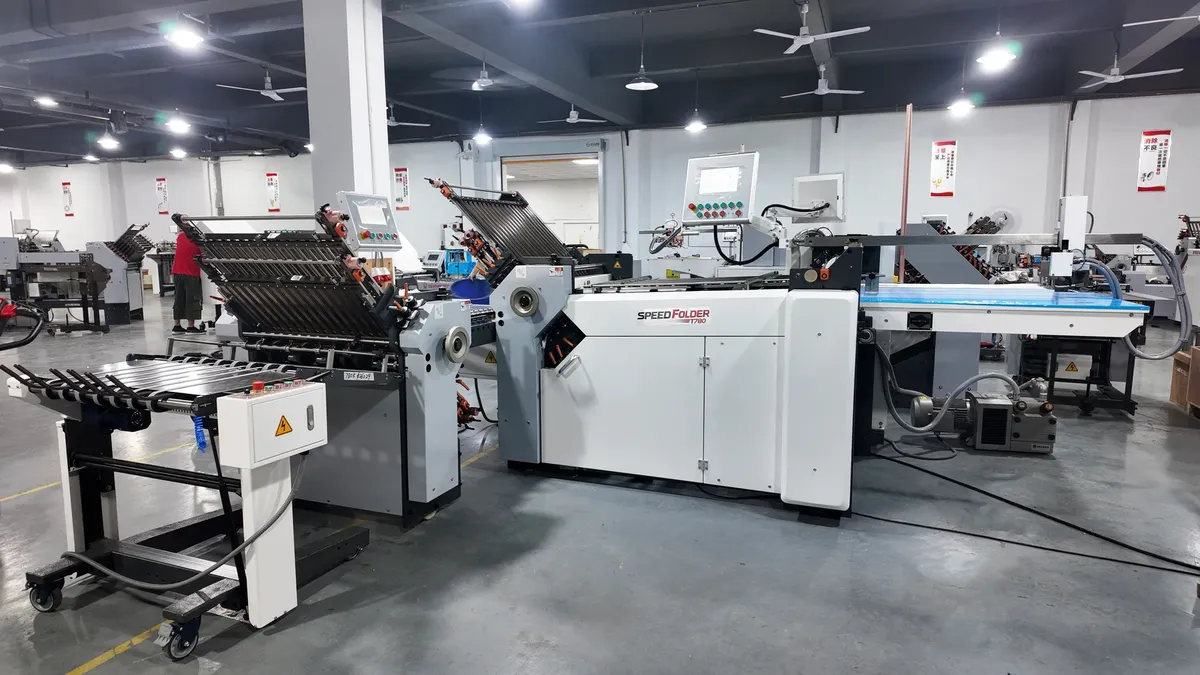
Large-format folding
Check the largest sheet, paper weight and installation envelope before choosing the layout.
View specifications →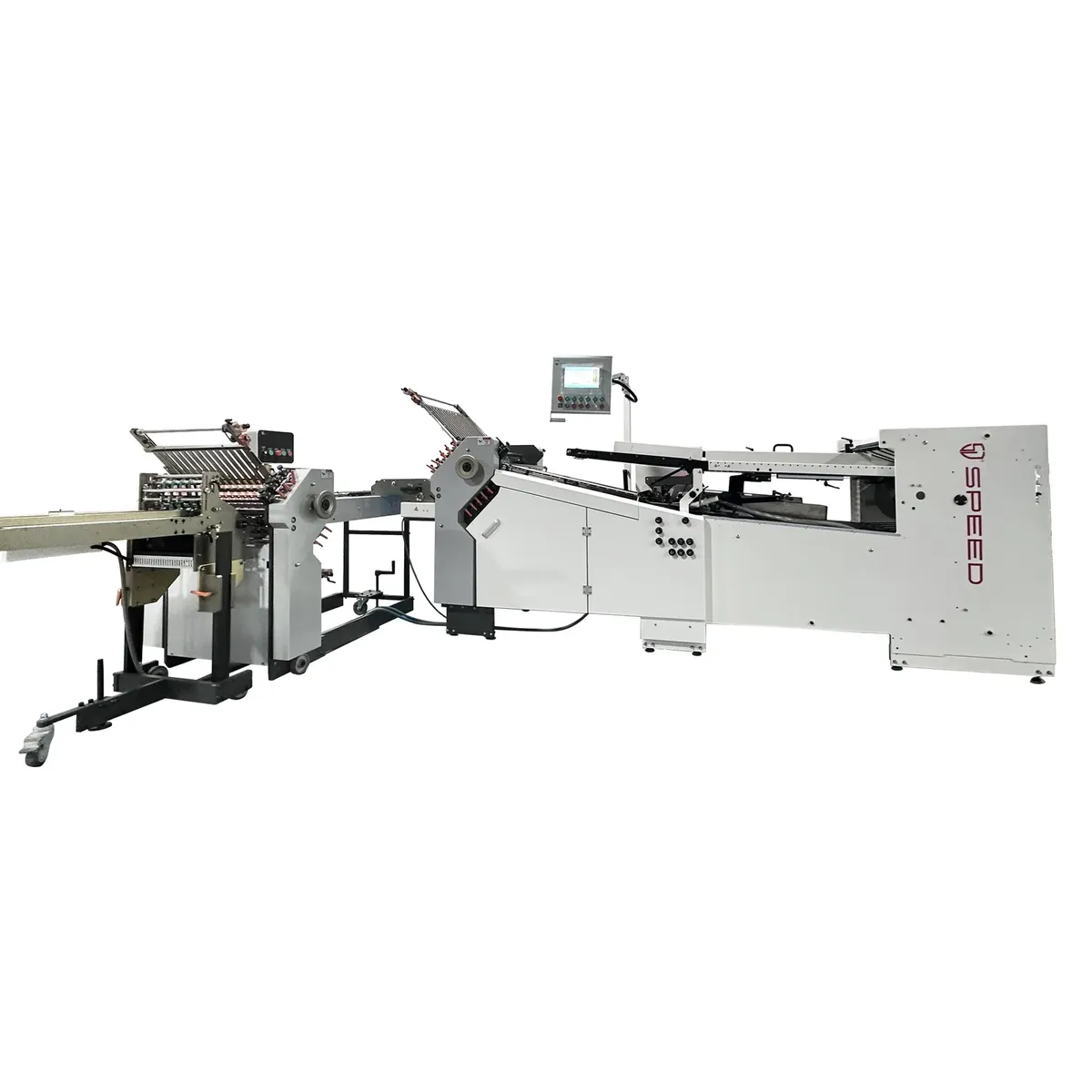
Feeding module
Review feeder compatibility and replenishment access with the selected folder.
View specifications →| Equipment | Sheet / feed / working width | Paper weight / finished thickness | Published speed |
|---|---|---|---|
| T780 | 780 × 1200 mm | 40–210 gsm | 210 m/min |
| RP-FEEDER | On request | On request | On request |
Values refer to individual products. Actual line output depends on the stock, fold sequence, optional equipment and delivery arrangement.
Use the diagrams to describe the finished piece. The model references below come from the reviewed product overviews; the ordered plate arrangement and your stock determine the final fold capability.
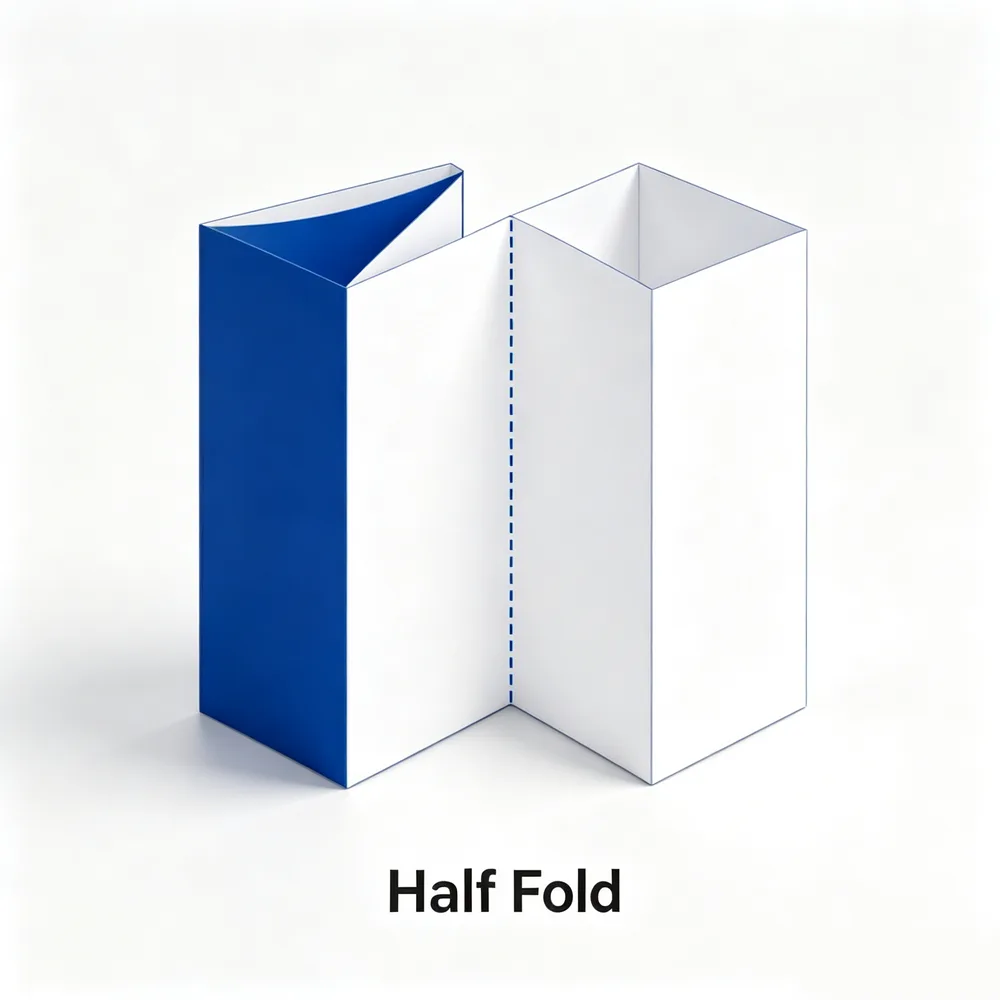
One fold, two panels — leaflets, mailers, greeting cards.
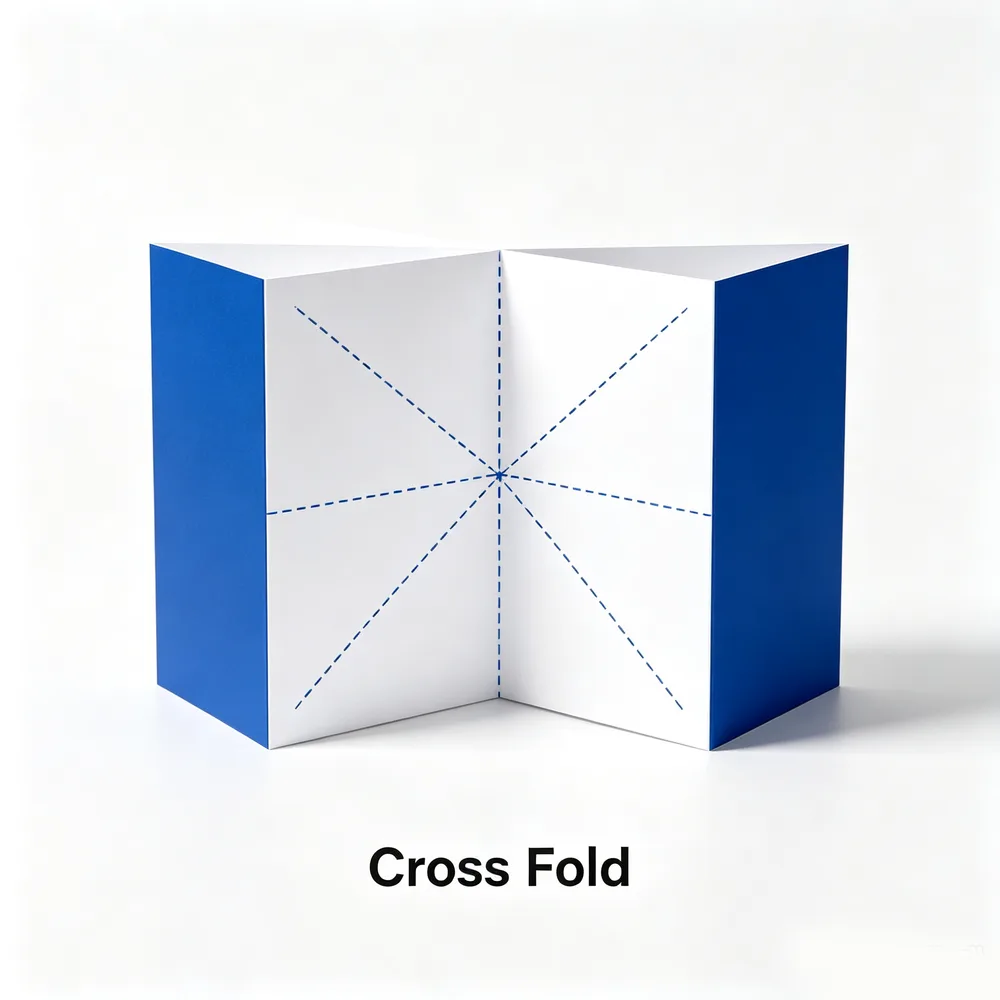
A parallel fold followed by a fold at right angles on the second unit.
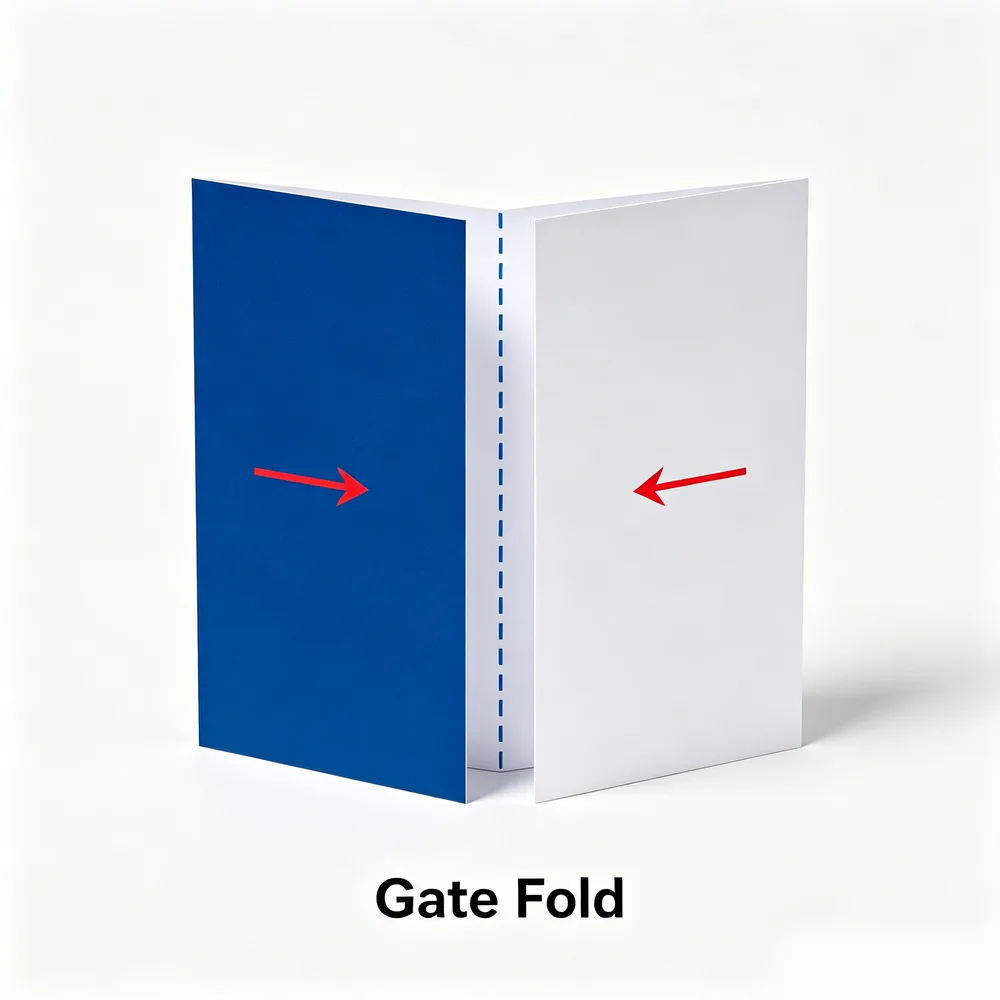
Two panels fold inward and meet in the centre — the classic programme insert.
View the related feeding, folding or finishing operation in the existing SPEED video library. Confirm the proposed configuration against your own job brief.
T780 large-format folder at ALL IN PRINT CHINA
The T780 running large-format work on a customer stand — 780 × 1200 mm sheets, 40 mm rollers and the recirculating feeder.
Watch on YouTube →T780 flagship large-format folder
T780 with vacuum feeding, servo drive and PLC touch-screen control.
Watch on YouTube →04 / Review the sample
Agree the test stock, drawing, operating conditions and acceptance criteria with our team. The checks below help structure that review.
Run the largest intended printed sheet and assess skew, fold alignment and handling throughout the sequence.
Check marking and cracking, especially on the heaviest or most sensitive stock in the job mix.
Review the final equipment drawing, utilities and loading or maintenance access before delivery.

Parallel, roll and gate folds in 100–200 gsm stock, folded square enough to stack flat.
Commercial print shops alternate between brochure, catalogue and mailer formats. Fold-pattern coverage and changeover time therefore matter alongside running speed.
T490, T600 and T780 configurations cover different sheet formats. Round-pile feeding can support longer runs on compatible T600 and T780 lines. Match the plate set and feeder to the real job mix.
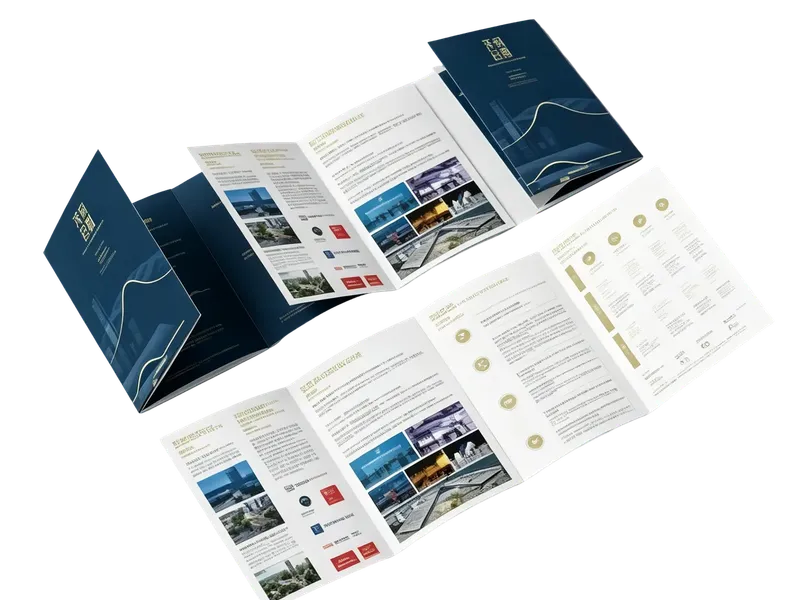
Leaflets and promotional inserts folded to carton size, packed by automatic equipment.
Carton inserts and promotional leaflets are folded to a finished size that downstream equipment can pick up consistently. Square edges and flat stacks may be needed for automatic packing.
T520, T600 or T780 folding configurations can be paired with SD-X250 trimming or SD-XP300 pressing when the finishing requirement calls for them. Confirm the carton and stock before selecting modules.
Speed on a folding machine is not a single number. A folder only holds its rated 180 or 210 m/min if the feeder keeps up, the rollers do not slip, and the delivery does not force a stop every few thousand sheets. High-speed folding is therefore a system question: feeder continuity, transmission type
Solution · Commercial printA commercial print finisher is judged on the number of different jobs that can leave the floor in a day. That makes changeover time, fold-pattern range and the ability to switch paper stock between jobs more important than a headline speed figure nobody runs all week.
Send the job drawing, printed stock information and production requirements. Our team can review the equipment combination and arrange the next technical discussion or sample test.
Fold-Test Sample List
Max 5 machines per fold-test request